Trust in AVs · Infotainment & Mobile App · 2023

TrustinAV's

Cultivating trust between young drivers and autonomous vehicles through user-centered design.

UI DesignUX ResearchCar InfotainmentMobile App16 weeks

TEAM

8 people

MY ROLE

UX Designer & Researcher

TOOLS

  • Figma
  • Miro
  • Google Forms

TIMELINE

Sept – Dec 2023

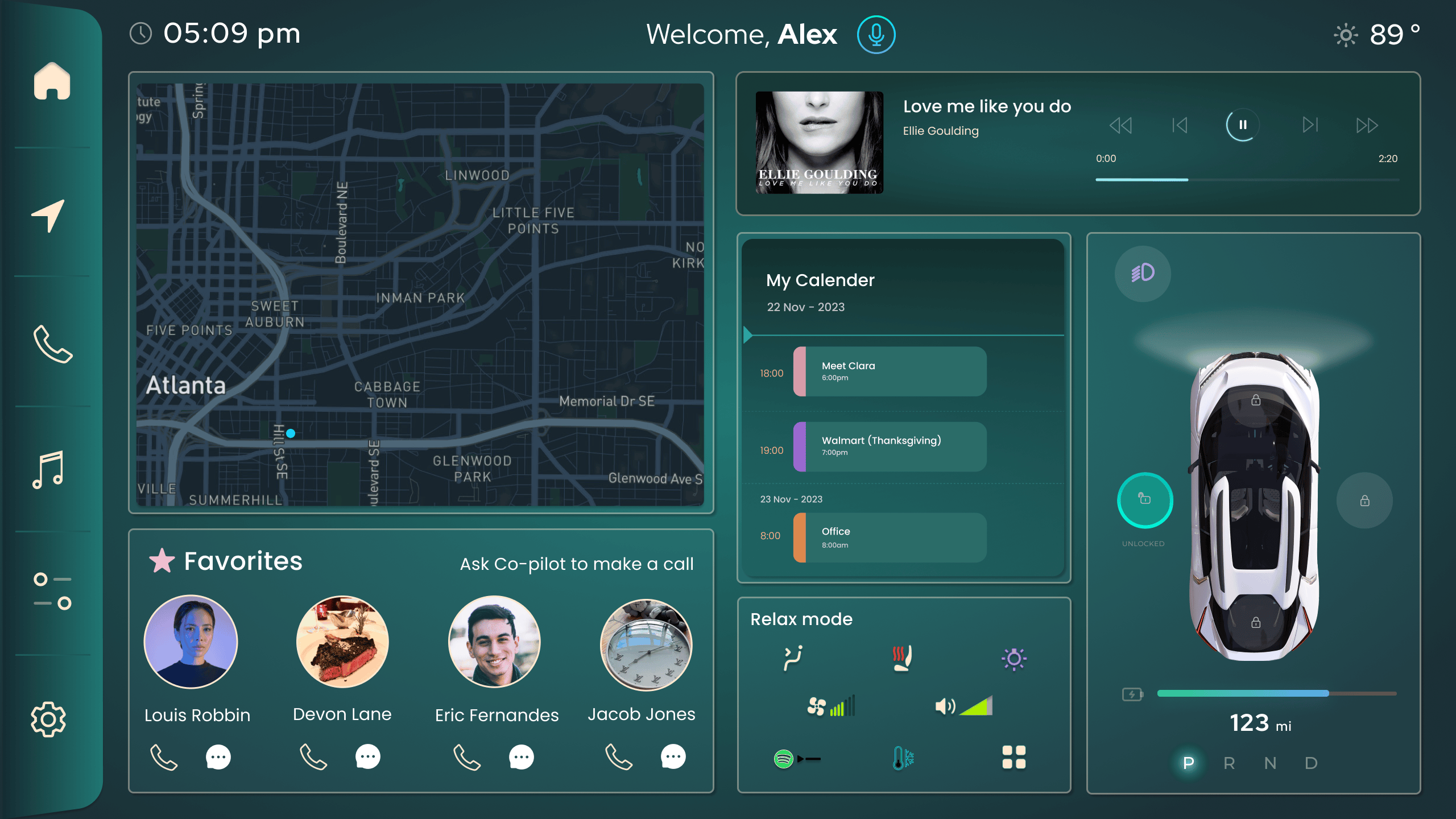
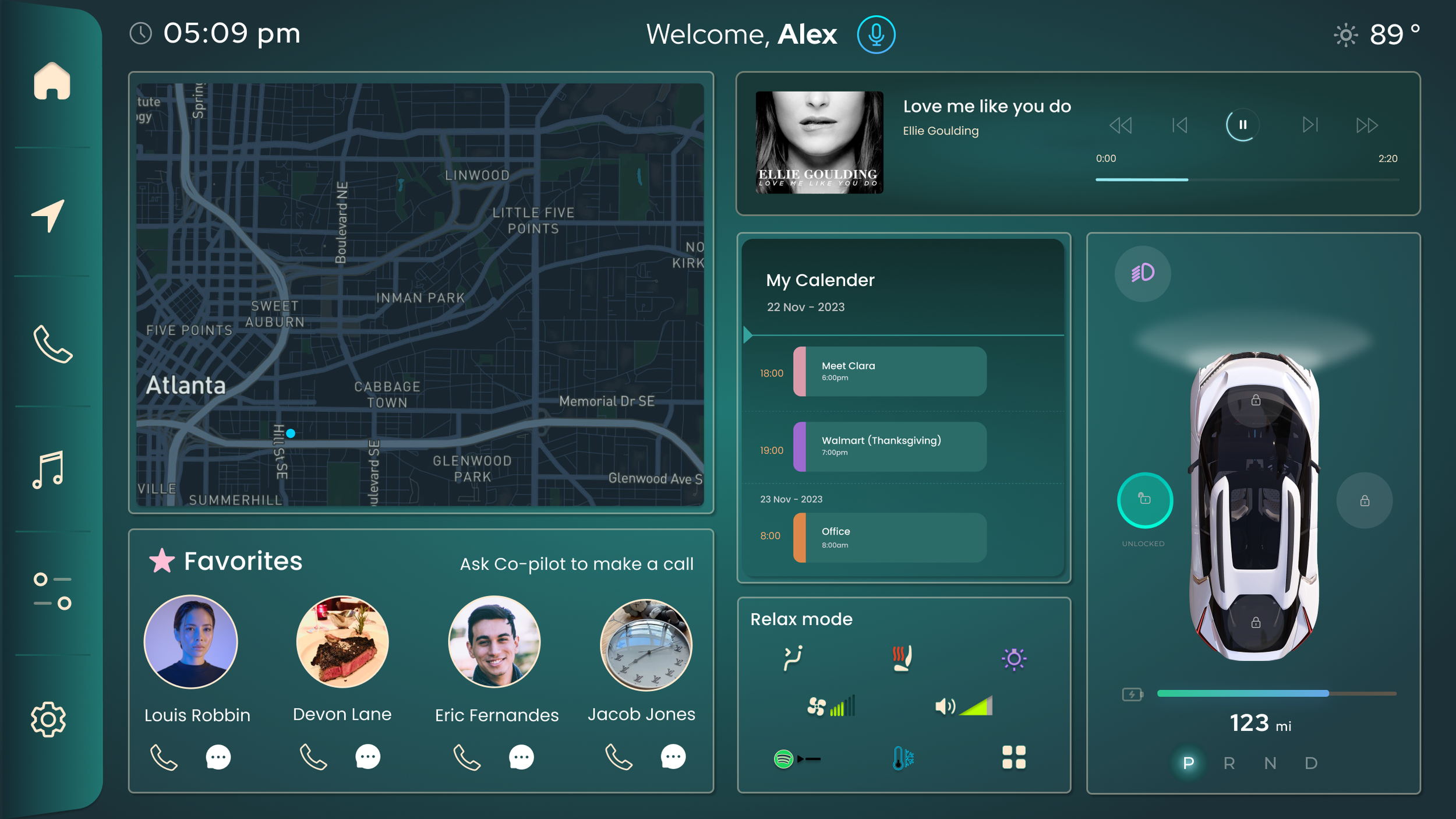
Trust in AVs infotainment hero screen
Infotainment
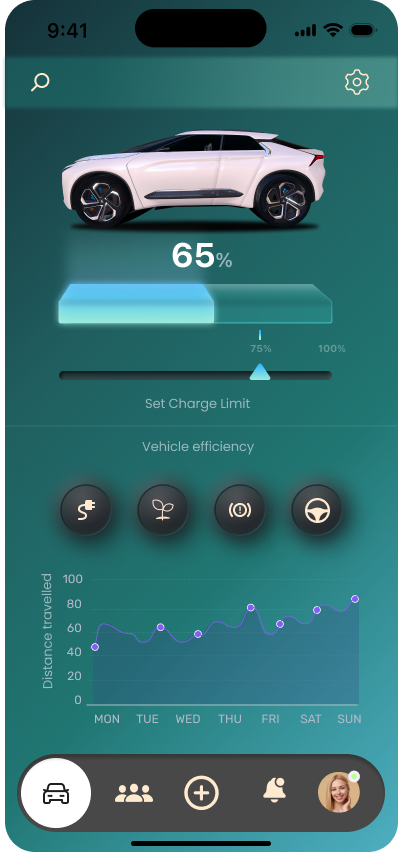
Trust in AVs companion app
THE BRIEF

Autonomous vehicles promise a safer, more efficient future. Yet, technological capability alone isn't enough; the true barrier to adoption is human trust. Our goal was to design an interface that bridges this gap, providing clarity and calm during the ride.

0%
Current AV adoption rate
16-0
Target demographic age
THE PROBLEM

Sneak Peek

Scenario 01

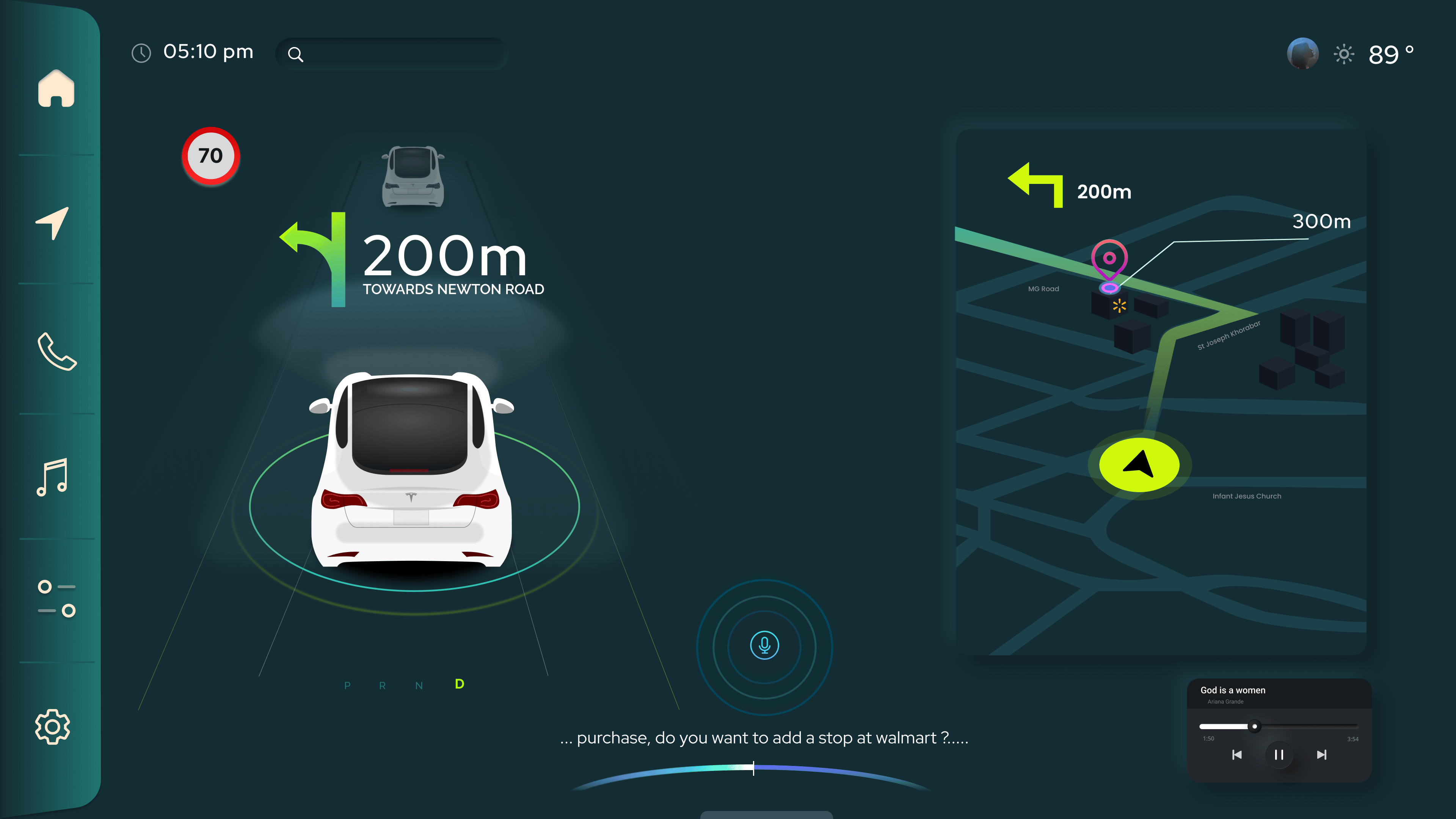
Optimized route suggestions

  • AI co-pilot learns the routine of heading back home around 5 pm and suggests navigation based on learnt data.
  • On the way home, AI suggests stopping at Walmart by accessing calendar tasks, to facilitate efficient time management.
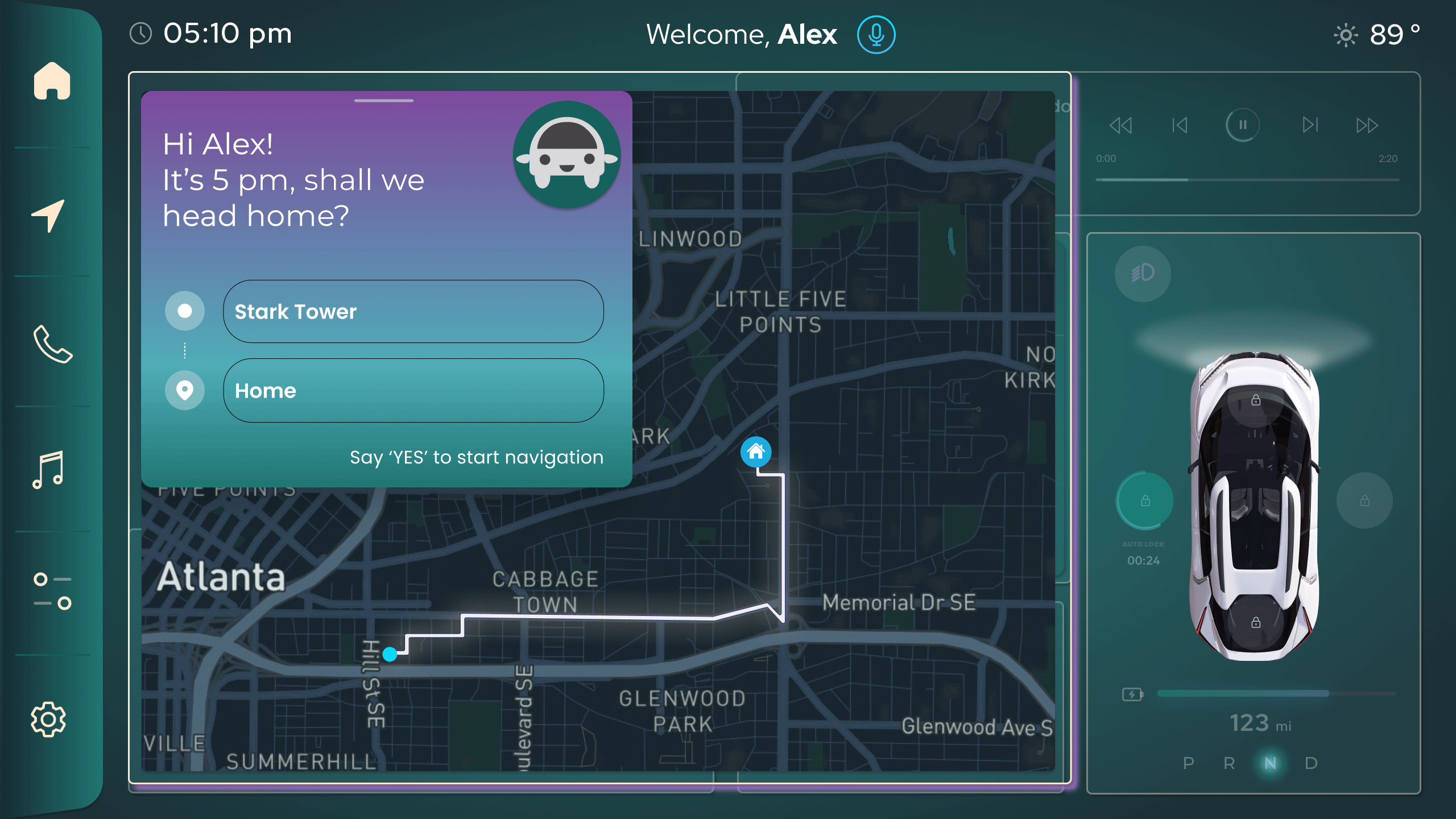
Optimized route suggestions screen 1
Optimized route suggestions screen 2
Scenario 02

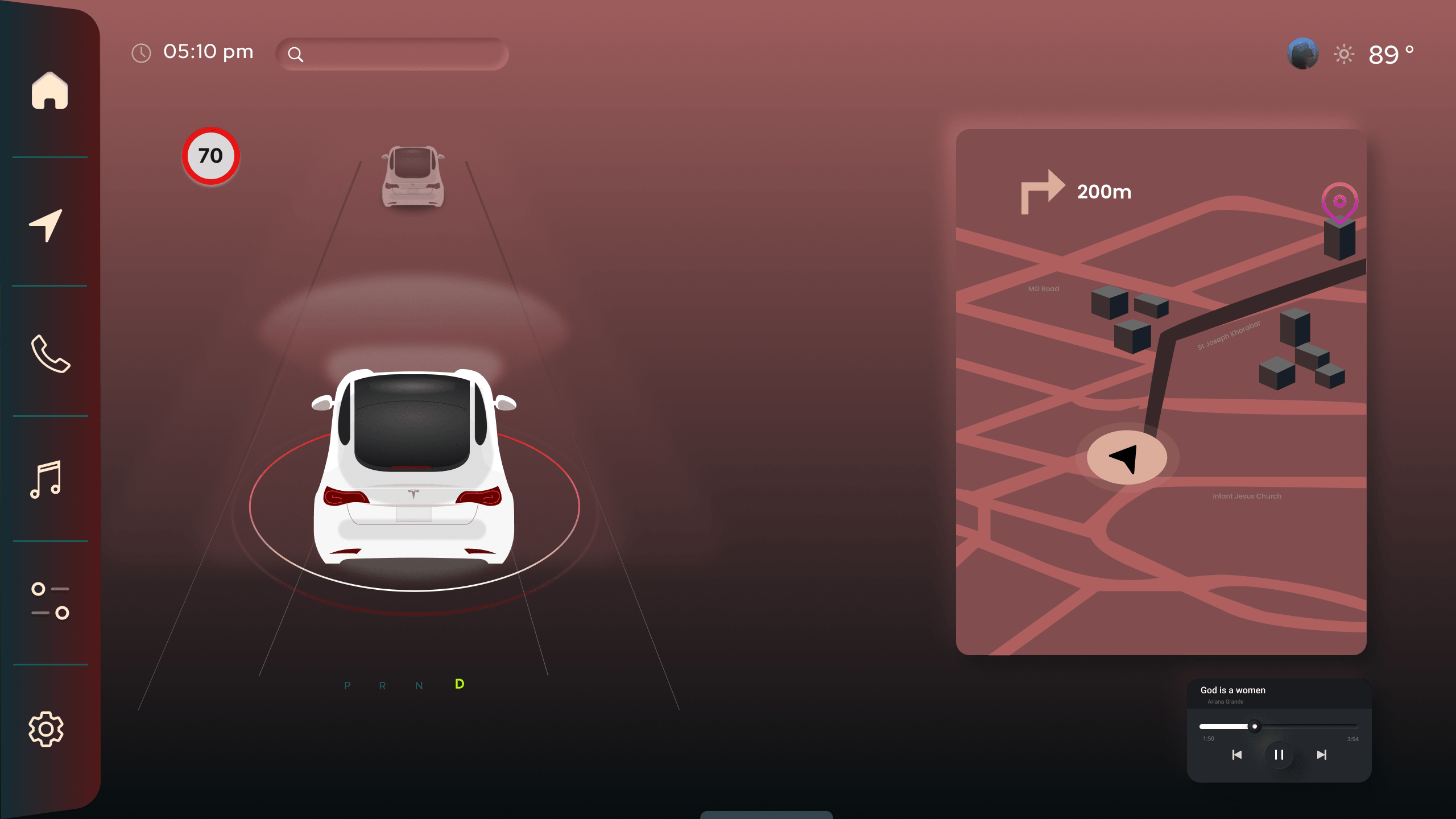
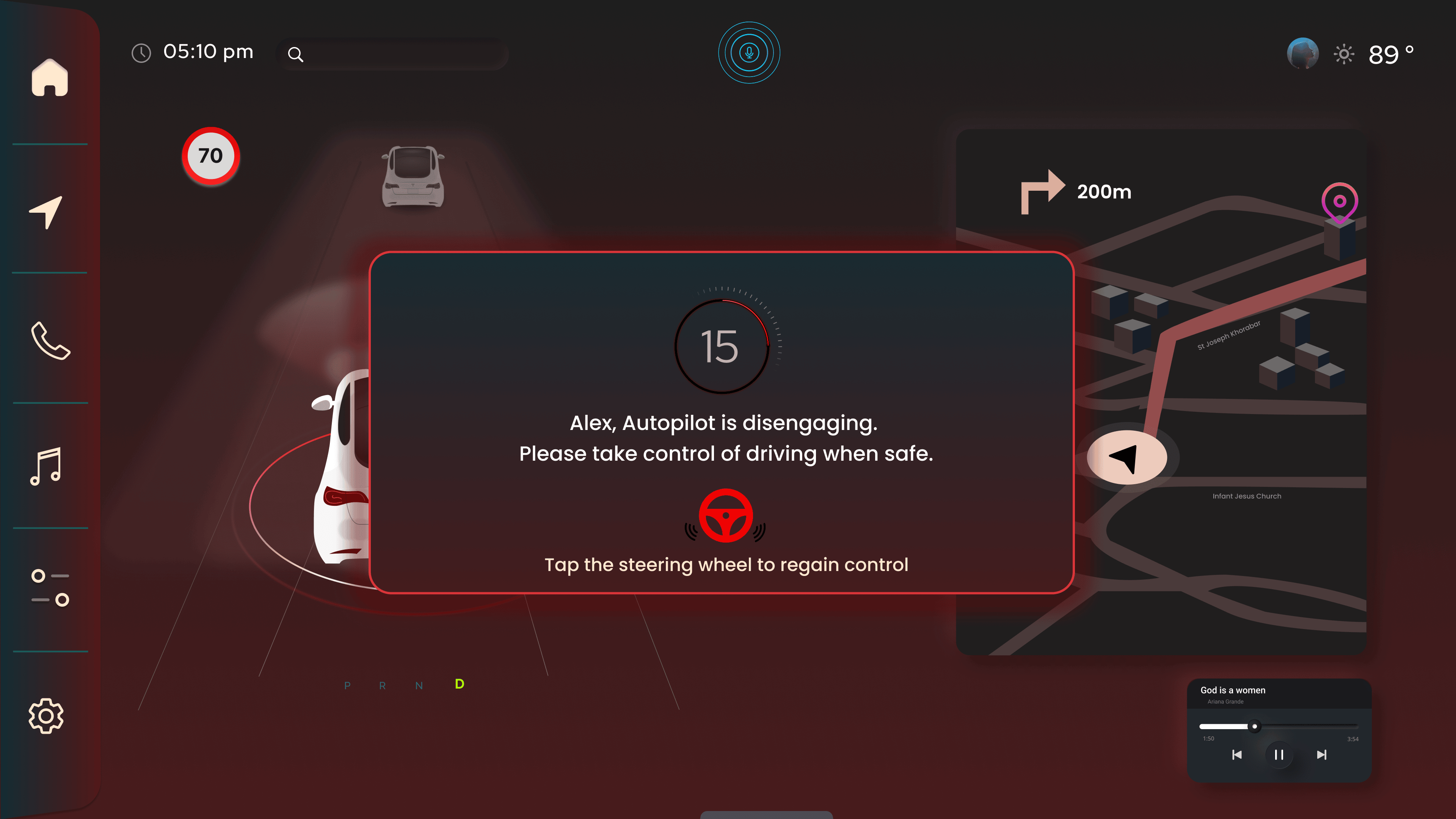
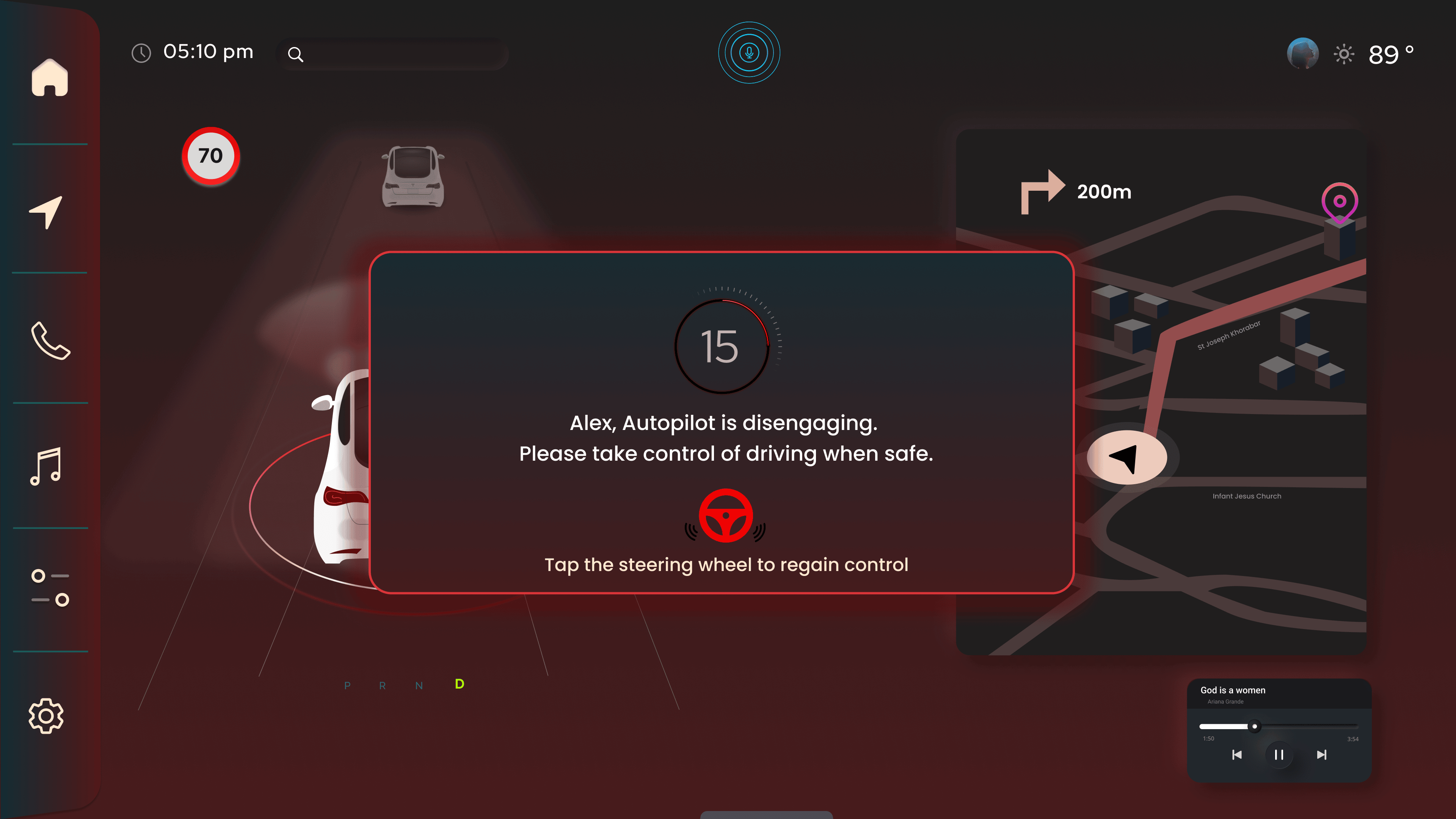
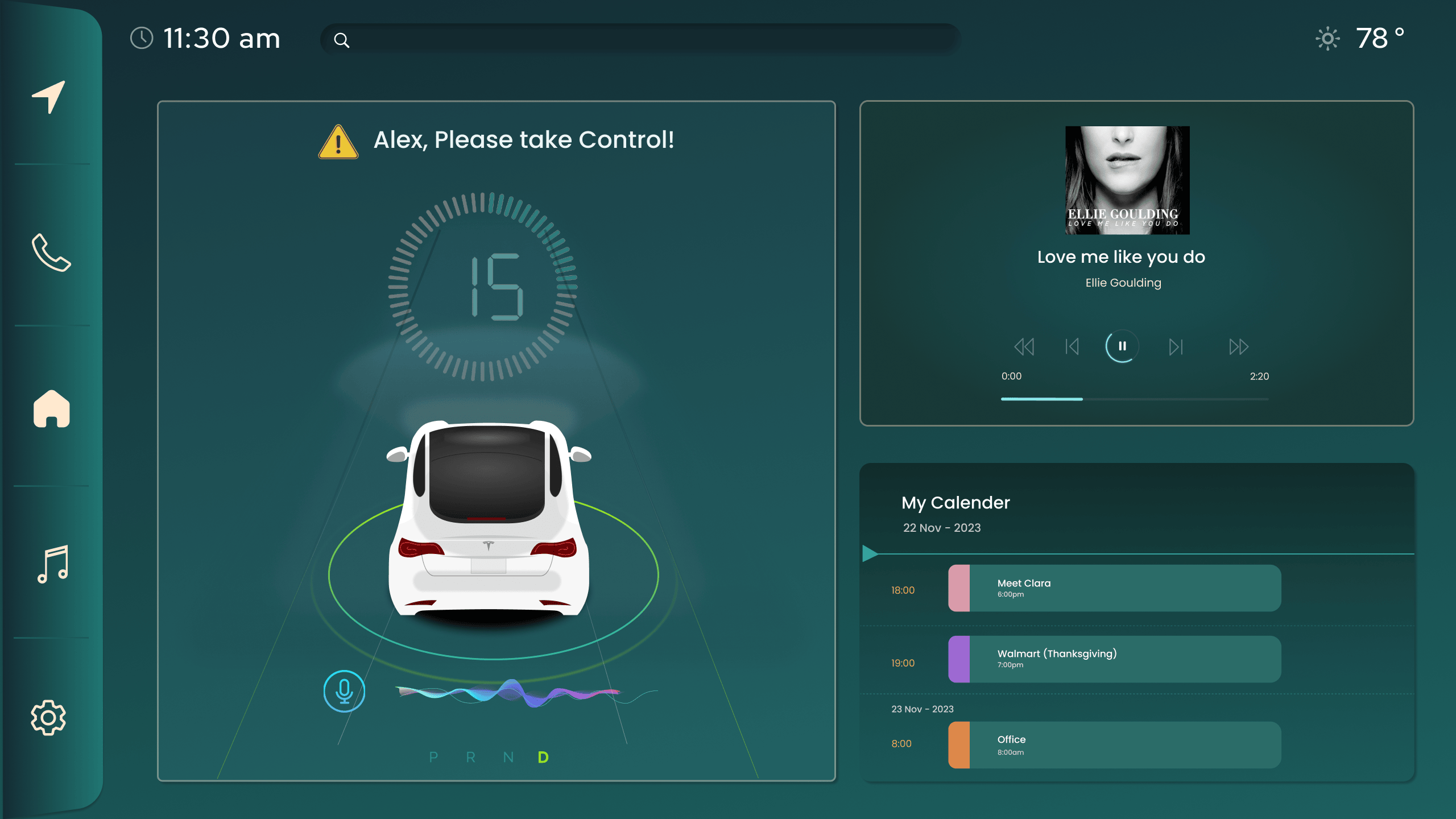
Delayed transition and clear communication

  • In case of an autopilot to manual control take over, the Infotainment system alerts the driver through messages, tones, and light, offering a grace period to act and moving to a safe spot.
  • AI co-pilot enhances user interaction.
Delayed transition and clear communication screen 1
Delayed transition and clear communication screen 2

Infotainment

  • Audio & visual alerts
  • Ambient lighting
  • AI assistive co-pilot

Mobile App

  • Statistical data
  • Vehicle efficiency
  • Optimised routing

Prototyping

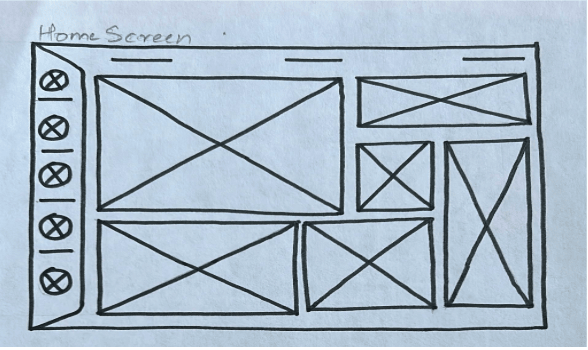
Low Fidelity

Low Fidelity

Concept exploration and user flows

High Fidelity

High Fidelity

High-fidelity UI and prototyping

Iteration · Alerts

Drag to compare
V2V1
V1
V2

Iteration · Custom Modes

Tap a card to flip · before → after

Research

Interviews

Zoom & In-person

Listening to young drivers about their AV expectations.

Secondary Research

Driver-vehicle interface aesthetics

Mapping pragmatic quality and how it earns trust.

Users

Young drivers, age 16-25

Primary users of the infotainment system

Mapping

Distrust towards AVs

Where confidence breaks and where reassurance is needed.

Personas & Scenarios

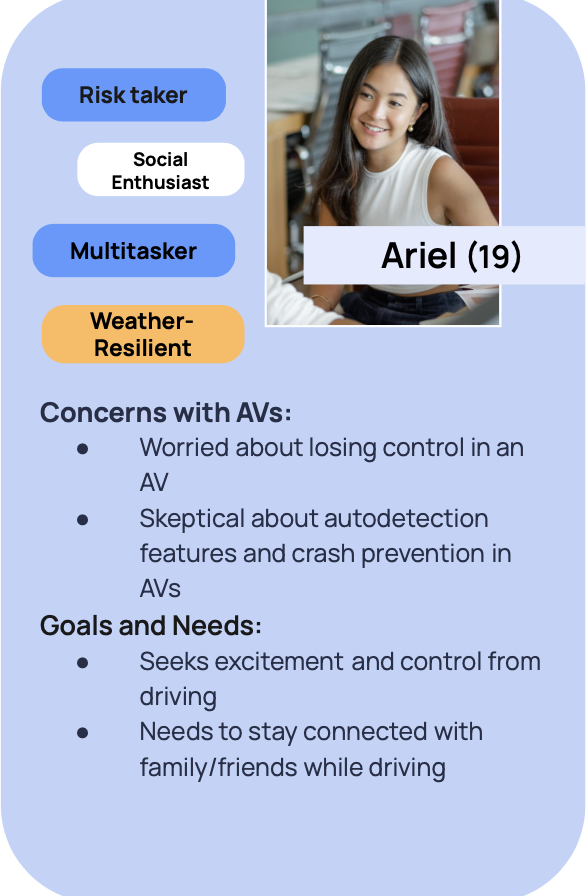
Ariel
Scenario 01

Ariel

Driving back home from school in her new semi-autonomous car on the freeway.

CommuterCalendar-drivenTrust through clarity
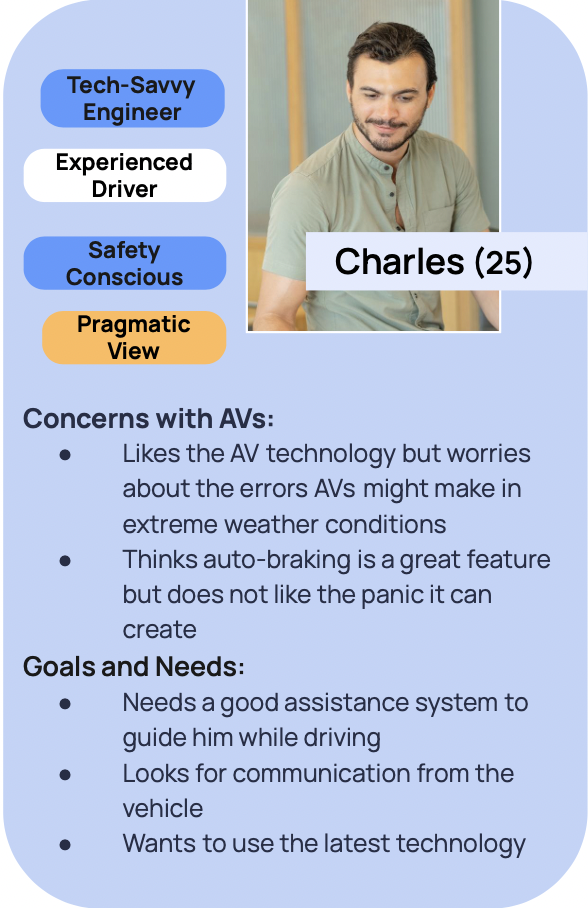
Charles
Scenario 02

Charles

Headed to a ski resort with friends, using AV technology on snow-clad roads.

Road-tripperEdge conditionsTrust through control

Ideation & Sketching

Mapped user concerns into structured insights and clearly defined problem areas, guiding the design of intelligent, user-centered solutions. The final concepts focused on enhancing communication, reliability, and in-vehicle assistance for autonomous vehicle users, with a strong emphasis on infotainment systems and mobile experiences.

CommunicationReliabilityAssistance

Final Prototype

The infotainment system and companion mobile app, designed for clarity, calm, and trust. Tap any screen to expand.

HighlightsAudio & visual alertsAmbient lightingAI assistive co-pilot

A mixed-method approach combining quantitative data and qualitative insights to validate design decisions and uncover deeper user behaviors.

Testing Methods

Quantitative Analysis

  • Designed a 15-question survey to capture behavioral patterns and user preferences
  • Used Likert scale ratings and targeted open responses to quantify usability and sentiment

Qualitative Analysis

  • Conducted think-aloud usability sessions to observe real-time decision-making and friction points

User Groups

Primary Users

Young drivers (16–25) exploring and adapting to autonomous driving experiences

Secondary Users

Adults (25+) with varying levels of trust and familiarity with AV technology

Validation stages

Low-Fidelity

Tested early concepts internally to refine information architecture and interaction flow

High-Fidelity

Evaluated usability, clarity, and trust-building elements across infotainment and mobile interfaces. Assessed layout efficiency and overall user confidence.

Survey Data & Insights

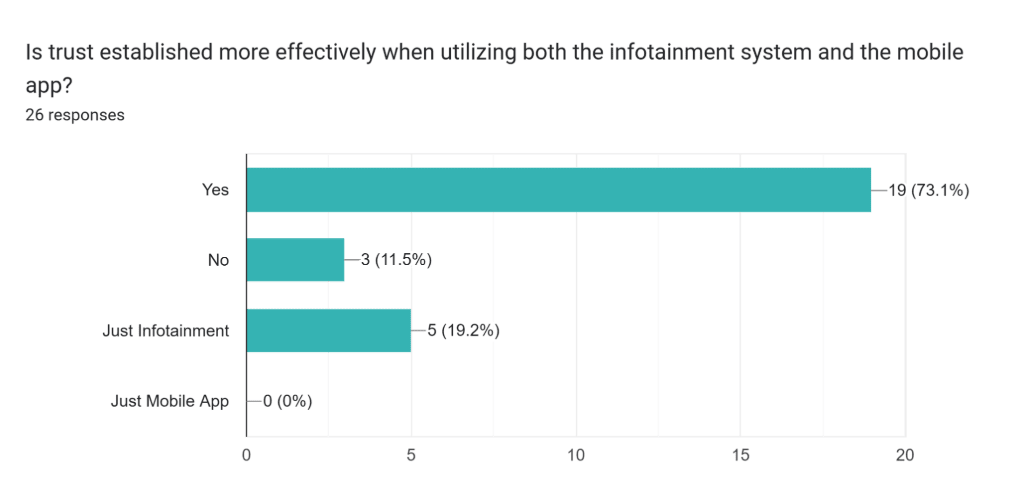
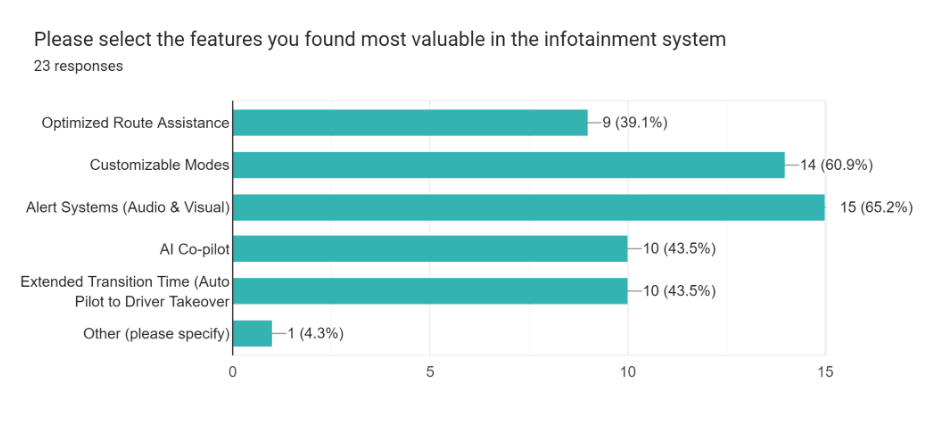
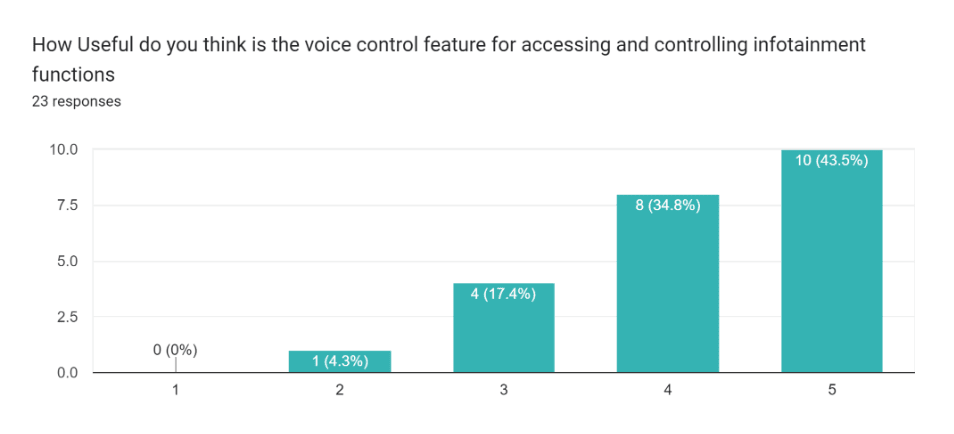
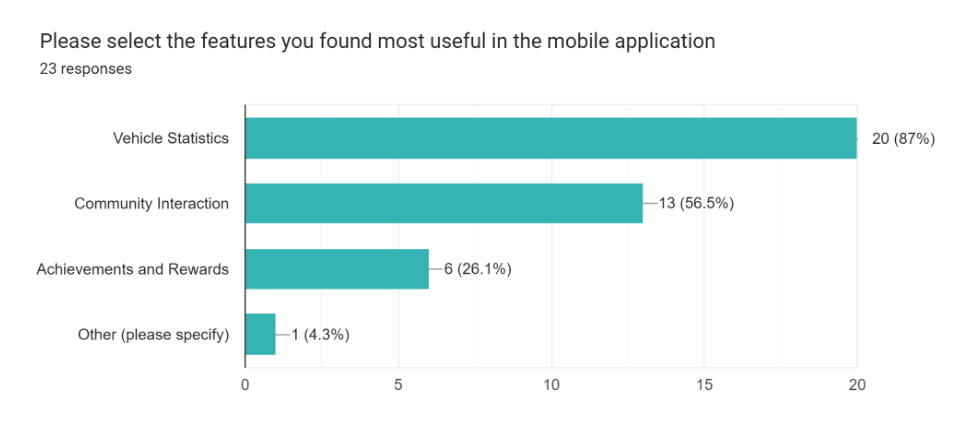
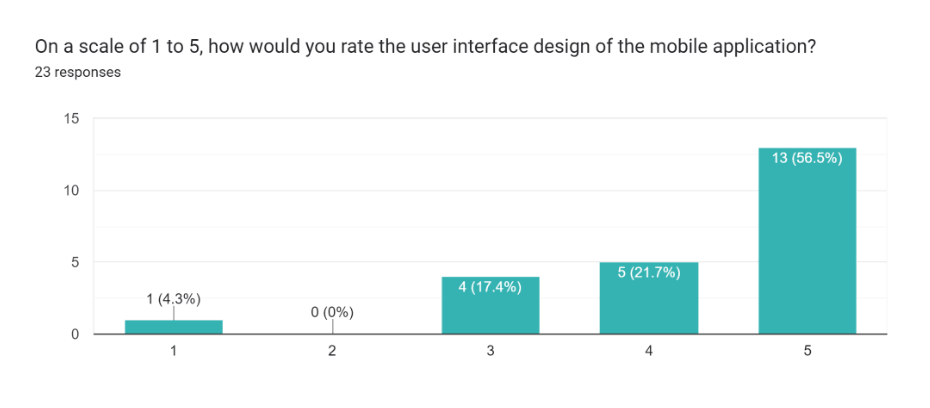
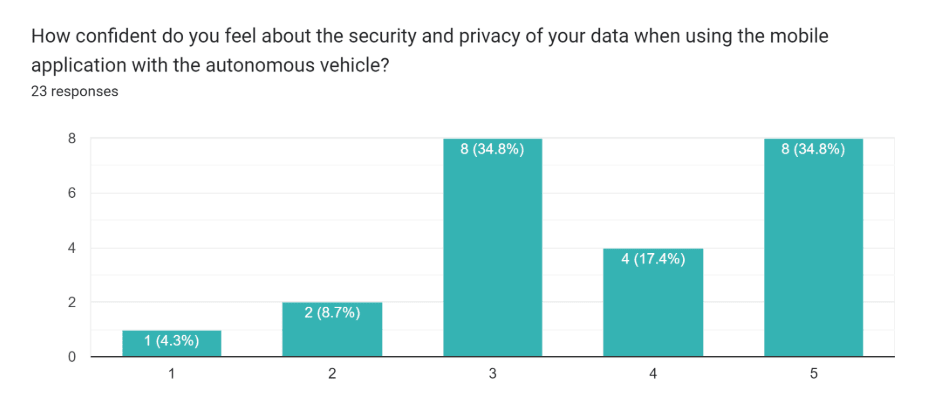
Survey result 1
Survey result 2
Survey result 3
Survey result 4
Survey result 5
Survey result 6
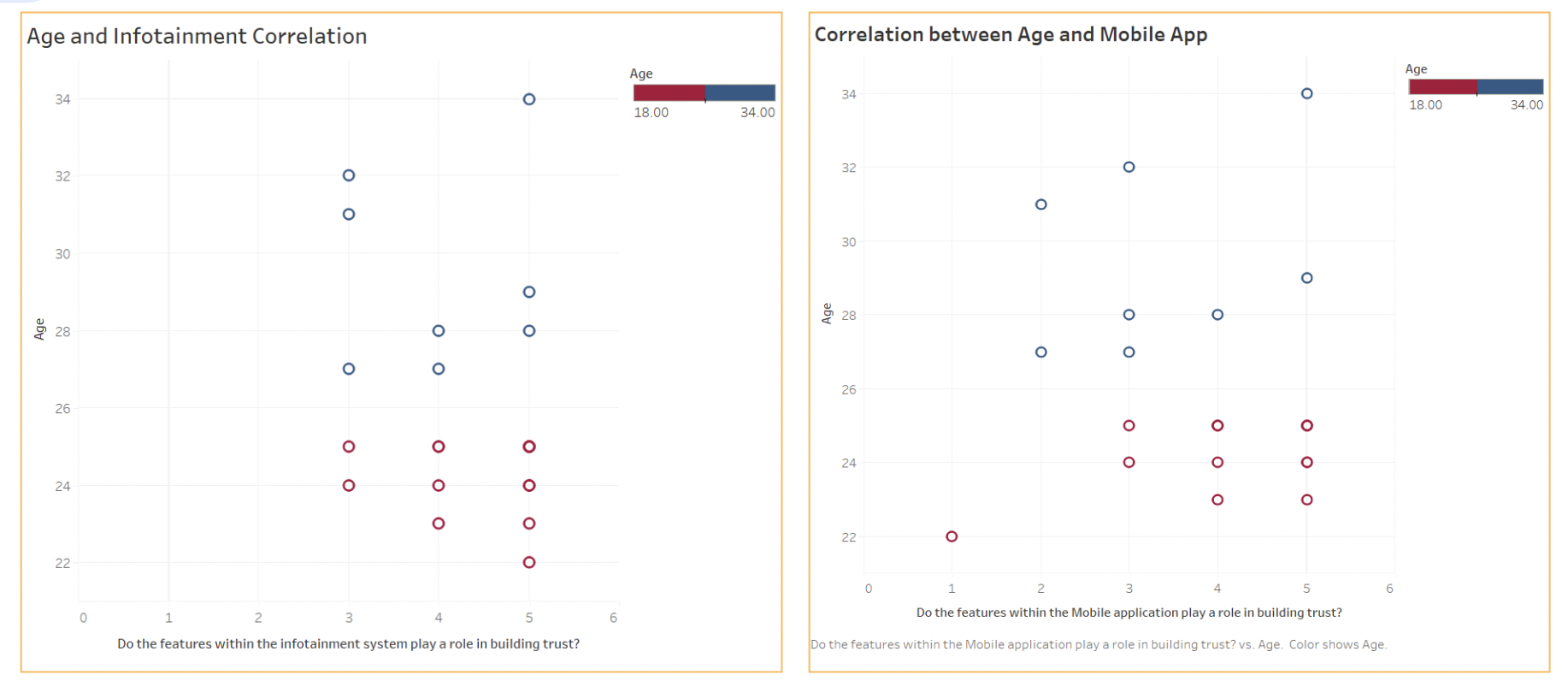
Correlation between age and product preference
Correlation between Age × Infotainment and Age × Mobile App preference.

Reflections

Infotainment

Mobile App

Thanks for reading.

Autonomous vehicles, trust, and in-cabin clarity — if that intersection resonates with what you're building, I'm always happy to talk research, UX, and what's next.